I have officially completed a whole school year since we moved to Korea! June 19th was the official last day for the students, so it’s on to 2 months of decompressing, adventure, planning, and reflection time for me!
Here are several things that living and working abroad have taught me this year:
1. Changing locations doesn’t change who you are.
I’ve said this before, but it’s one of the biggest lessons I’ve learned from moving overseas. The experiences we’ve had here absolutely give us a different perspective on the world and people, but habits and personality still follow you to a new place. You have to practice who you want to be, no matter how hard it is. One example is how I came to the realization that I needed a major mindset shift if I was going be able to make the most of my time here. In previous blog posts, I’ve expressed many frustrations that we have felt during this experience. While these frustrations are very real and the feelings are valid, I finally decided to change my own perspective and stop focusing on everything going wrong so I could make myself appreciate what was going right. Our overall mood has drastically changed little by little to the point that we are much better now than before. Still, I have so many goals and ambitions I want to focus on while here, that I sometimes don’t know where to start. Recently, I’ve selected a few main things to focus on during the summer break so I can start building those little habits now. Wish me luck in working on these goals and trying to build consistency in my habits!
2. Language skills either help or hinder your progress and ability to function in daily life wherever you are.
Language has been our biggest challenge in South Korea. The frustrations of not being able to be a completely functioning adult are endless. We can’t pick up the phone and make appointments or talk with officials about important issues we might need information about. I can’t give directions to delivery drivers trying to find our apartment if they call us. If one of us gets sick, we can’t understand what our diagnosis or prescription regimen is if the doctor doesn’t speak any English. When we first moved into our apartment, we struggled to operate the smart system panel, figure out which switches turned on which lights, how to turn on the heating and a/c, or how to operate the gas stove. We feel isolated socially because we can’t communicate with the people around us unless we use translation apps or AI, but it’s not the same as a simple conversation. This aspect alone has completely changed my view of immigrants and my former ESL students and their families in the U.S. Being a foreigner takes guts and is not for the weak-willed. Luckily, we have found an online language school and are wanting to sign up for Saturday morning classes this summer to get started with our Korean language learning. We are hoping that this will help us a lot with this difficult challenge we’ve experienced here. I know that I will definitely be a better ESL teacher with this insight. Without language, we can’t truly live up to our full potential in society.
3. Racism exists all over the world, especially in countries with very homogeneous populations.
This aspect didn’t surprise me, but it has been very eye-opening to experience it as a foreigner in another country. There are three very distinct moments we have had where we were clearly being discriminated against as non-Koreans. The first was sometime in the fall. We had just gotten to the bus terminal after riding the train home and were going to take a bus back to our apartment. I used a translation app to confirm with the bus driver if we could use a certain type of payment for the ride (something called Tmoney) as well as confirming that the bus was going to our destination, and he told us to get off the bus without answering my question. We were confused because there was plenty of space since there were only a few people on the bus, and it was the correct bus number. He persisted, so we got off not to cause issues. I text one of my coworkers and she confirmed that the bus number was correct and that we should have been able to use the type of payment I was asking about. Then she said that it was probably an instance where we were being discriminated against because we were foreigners. We didn’t realize it when it was happening, but it made sense after we recalled the situation. The second instance was on the subway. We were sitting and looking at something on Richard’s phone when an older man suddenly walked by and yelled something in Korean at us. We looked at the old man, and he said something else while standing in front of us. We were extremely confused and looked at each other, but he just walked away after this. There are seats designated for the elderly on public transportation, but we were not sitting in those seats, so the situation was very strange and we had not interacted with the man or done anything to provoke him prior to this. The other people on the subway were staring at us after he walked off, so we were pretty confident he said something racist to us because we were foreigners. The final incident was when we were waiting for a train to go to the southern part of South Korea. We were sitting in the platform area where the train car with our seats was going to stop. Just a few minutes before the train was scheduled to pull up, two railroad officials came up to us and asked to see our tickets. We showed them the tickets on the app, they took a photo and made a call, and then as the train was pulling up, we were told that we had to change cars 10 train cars down. We weren’t given any explanation for the change, but we heard them use the Korean word for “foreigner” while they were on the phone. We ran and had to get on the train in a different car then walk the rest of the way down through several other train cars so we didn’t completely miss the train. We were pretty certain that our seats were given to someone else, and that we were asked because we were foreigners and no other reason. Although these are very mild instances compared to others we’ve heard about, it is still jarring to experience discrimination when you are just trying to exist. It has changed our perspective on race, discrimination, and prejudice in the U.S., even though racial and cultural diversity is normal there compared to here.

4. Other English speakers absolutely don’t use English and communicate the same way!
This was something that really surprised me, even with my background in ESL. It is one thing to discuss World Englishes in a graduate class and another to experience it in real life. Working at an international school, I have coworkers from other English speaking countries around the world. Australia, New Zealand, South Africa, and the UK, just to name a few. However, just because they speak English as their first language, does not mean that we communicate in the same ways. American humor and sarcasm is extremely different from the rest of the world, and does not come across the same way it does to other Americans. On the other hand, sarcasm from these other countries is also different and doesn’t come across in American culture either. Sometimes sarcasm is viewed as very rude in other cultures. Slang is completely different across different Englishes and pronunciation sometimes makes it hard to understand words that sound completely different in American English. Then add communicating with others who speak English as a second language, and the communication gets exponentially more difficult. I have had many conversations with students or native-Korean coworkers where I said something in a way that a native-English speaker would understand what I was implying or trying to say, but the native-Korean speakers misinterpreted the meaning of what I said. I would have to rephrase or choose more specific, less vague vocabulary. It’s been interesting to experience this with both native and non-native English speakers, but I feel like it has helped me become a better communicator overall.
5. Americans don’t think about measurements like the rest of the world.
When we first arrived in Korea, it was so hard to have a conversation with people about weight, height, temperatures, and distances because the U.S. is literally one of a few countries in the world that uses the imperial units system (pounds, feet, inches, Fahrenheit, miles) instead of the metric units system (kilograms, meters, centimeters, Celsius, kilometers). One weird thing that Americans do in conversation is using time to describe the distance of a place instead of the actual mileage. It is a completely different way of thinking and we would have to convert everything to fully understand the numerical value of what a person was saying. This is also the same with currency value. We have to look up the different exchange rates to get an idea of monetary value of something in comparison to U.S. prices (the U.S. is ridiculously expensive in all the wrong ways, by the way). This has been a very interesting cultural aspect to experience, but now we have a pretty good grasp of how metric units compare with imperial units without looking them up every time! We are slowly learning to understand the world in different ways.
6. The U.S. seriously needs to invest in a cross country bullet train and better rail transport system.
We. Love. Riding. Trains!! The public transportation system is an absolute dream in South Korea. Since we do not have a car here, this has made getting around much more convenient. The affordability is another reason why the U.S. should seriously consider leveling up it’s public transportation infrastructure. One train ticket from our area to Seoul is 4,900 Won, which is the equivalent of $3.60. This is one way, so round trip is about $7! The train ride is about an hour. There is another train that travels from Seoul to Busan that is much more expensive, but it is so fast! The bullet train in Korea moves at 205 mph (330 km/h), and cuts a 4 hour bus ride in half to 2 hours. It is definitely worth the extra expense, but it is still only about 45,000 won ($33.07) one way. And this is for general seating, not first class. Subway fare in the major cities is even cheaper and has heated seats in the winter. Buses are also extremely convenient, and some buses have premium gold seating that make traveling so comfortable! We have really enjoyed getting to use the awesome transportation system here and wish we had better options in the U.S!

7. Working in education is a challenge, even in one of the smartest countries in the world.
South Korea has consistently ranked in the top 5 countries in education for years. The majority of the students here are very hardworking and take their studies very seriously, which is a refreshing contrast to the collective apathy of students in the U.S. I can actually be a teacher in the classroom, not a crowd control bouncer because kids don’t stay in their seats. However, education is so competitive here, that it ties strongly into output-based self-esteem, self-worth, and identity for students. Students will start their days at 8 am at school and go until 10 pm at night at a local hagwon (specialized for-profit tutoring or supplementary education centers and businesses) before going home to start working on homework. Kids in the U.S. don’t do any homework, while kids in Korea do too much homework. It sometimes pains me to see the burden that academics plays in the students’ lives here. Still, as an educator, it also encourages me to do my best for my students. Education as a career still remains as much a challenge with academically dedicated students as it does with academically apathetic students- trying to balance work and life, keeping up with professional and personal relationships with coworkers, keeping up with grading and paperwork deadlines, and constantly reflecting on my own practices in the classroom that are effective and ineffective so I can keep improving my own skills. Add all of this to trying to support teenagers mentally and emotionally through the changes and hardships that they are experiencing in life in general, and, yes, it is still very draining to teach in a another country.
8. Distance really does show you who your real village is.
This was a very hard reality that we had to come to terms with early on in our time in Korea. To be completely honest, part of me has become a little numb with this specific point. There are only a handful of people that have consistently kept up with us both since we moved. We’ve both reached out to people and been ignored or ghosted. It is a completely different experience moving across the world to a place where most people don’t speak the same language as you in comparison to moving to a city an hour away from your hometown in the same state. We felt completely isolated, lonely, and frustrated in the first two to three months here without the comfort of the community that we thought we had built back home. If you are one of those people that has consistently checked in on us through messaging or calling through social media and apps, thank you. When distance takes away any chance of physical presence, hugs, or helping of any kind, phone calls and messages are the only way we can express or feel love from the people we care about and want to hear from. Distance has shown us the difference in who the big talkers were in our life back in the states and who really meant what they said when they said they cared. This realization has been humbling, sobering, and heartbreaking all at the same time.
9. Living abroad with your spouse will challenge and grow your marriage in completely unexpected ways.
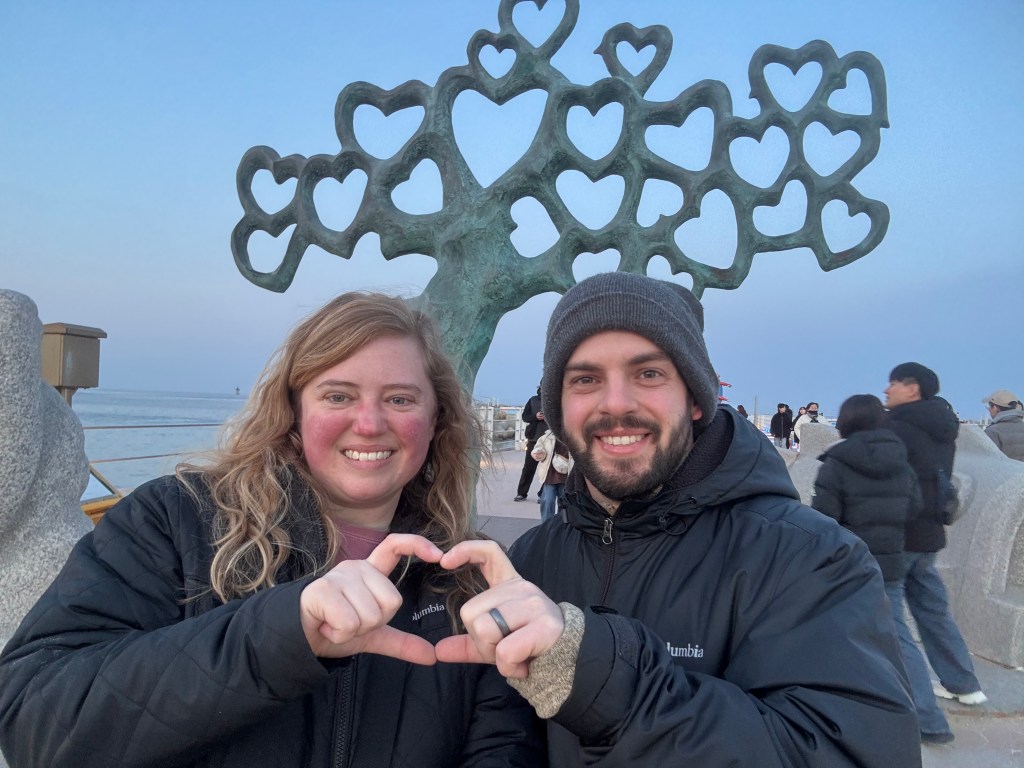
I am so grateful to have an amazing husband and grateful that our marriage and relationship is strong. We don’t take out our aggression and anger on each other like we’ve seen and heard of others doing, but try to talk through disagreements instead and truly understand each other better. Our marriage is absolutely not perfect- no marriage is- and living overseas together has both made us stronger and highlighted areas that we need to improve on. We have to be more intentional with our time together since I work during the day, and Richard is working online overnight. Deeper connection comes through the quality of the time we have with each other, not the quantity of time, and leaning into each other more for emotional support during this experience since we don’t have our friends and community like we did back home. In fact, moving here really showed us how much we were relying on external factors, and we are grateful to realize this so that we can focus more on each other and our faith instead. We were too comfortable in our comfort and security of routine and predictability. It took stepping into the unknown to break us of that.
10. Immersing yourself in another country’s culture makes you more aware of the good and bad parts of your own country’s culture.
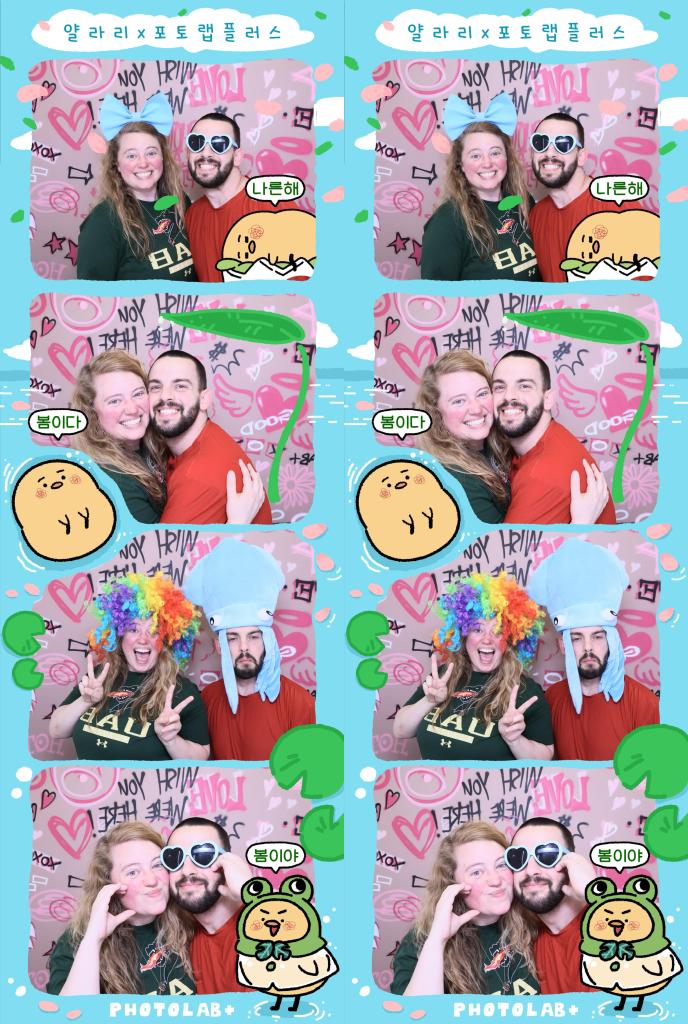
In 2015, I went overseas for the first time to China. When I came back to the U.S., I had major reverse culture shock. That was after 3 weeks away. We have now been in Korea for almost a year (a brief trip back home in November for a wedding, but only 3 days!), so I’m really curious what it will be like to go back home at the end of July. Even though we haven’t experienced the reverse culture shock yet, there are still so many things that remind us everyday how different it is to live in other places around the world. Work-life balance is completely nonexistent here in most of the jobs (especially office jobs) and took a while to adjust to. This really made me appreciate and miss my 3:30pm days working as a teacher in the U.S. Americans are so much more laidback than Koreans, overall. It is sometimes overwhelming to live in a place that feels very rigid, but we are learning to be ourselves and genuine to who we are in spite of this. Americans are a lot more playful and sarcastic, but Koreans see sarcasm as rude most of the time. It has been hard not being able to connect with the same kind of humor we are used to. One thing we really love is being able to walk everywhere we go. This is something we know we will miss when we do finally go back home, because it is so fun to walk down the street and hop into a photobooth shop or an arcade for a few minutes, then keep going and explore some more. The U.S was made for the convenience of cars, not foot travel. However, we often miss driving our own cars and the freedom to go where we want quickly, so I guess both have their pros and cons. Often, we feel very underdressed because dressing up is the standard here. I have definitely had to reevaluate my everyday clothing style and fashion, although it’s hard to find the right stores with my size here because Korean women are so tiny!! There are many more things we have experienced here that teach us more about the differences of our own culture, and we have realized that it’s ok to adopt some of the positive aspects of the culture we are immersed in to bring them back home with us. We know that we will look back on our time here fondly and let it shape us for the future we are hoping to build.
Final Thoughts:
This list is just a small glimpse into our overall experience here. We wish that we could share more of our experience with our friends and family in person, but we know that life is happening there, too. It would be so excited to welcome some of you to Korea, but a Facetime or Zoom call is ok, too. We love and miss you all!! Please let us know if you want to set up a Zoom call or Facetime or even write letters (lol)!
Picture Updates:


 Language Expeditions
Leave a comment