I have recently been thinking about borders a lot. Particularly the border between North and South Korea as well as the border between the US and Mexico.
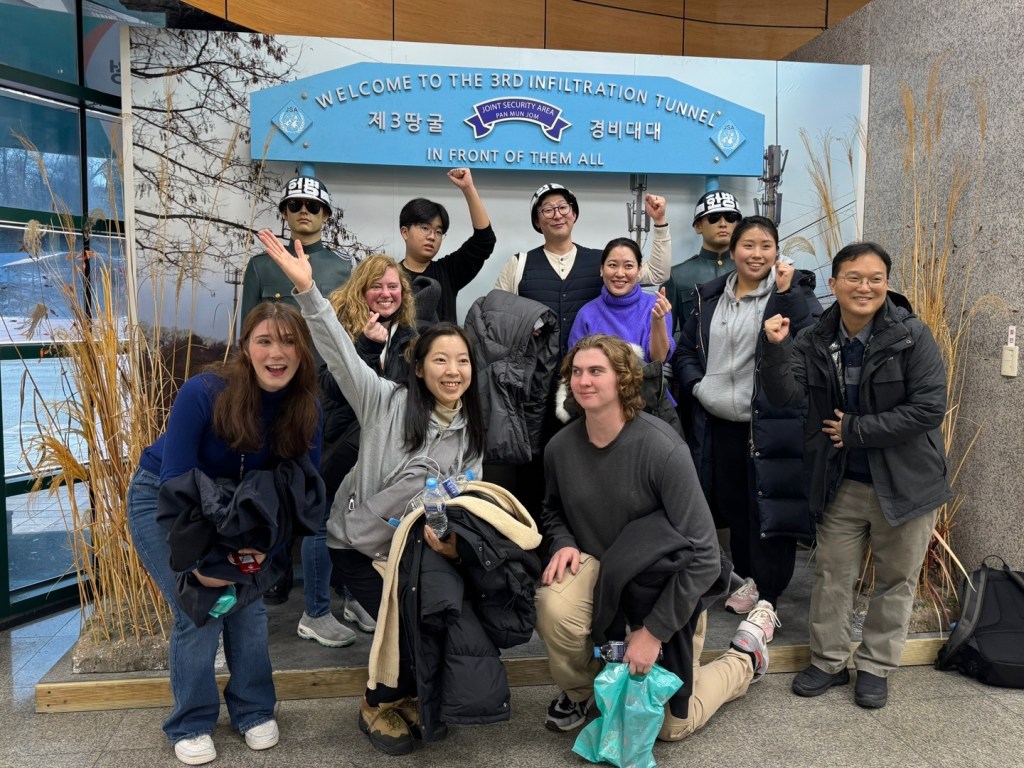
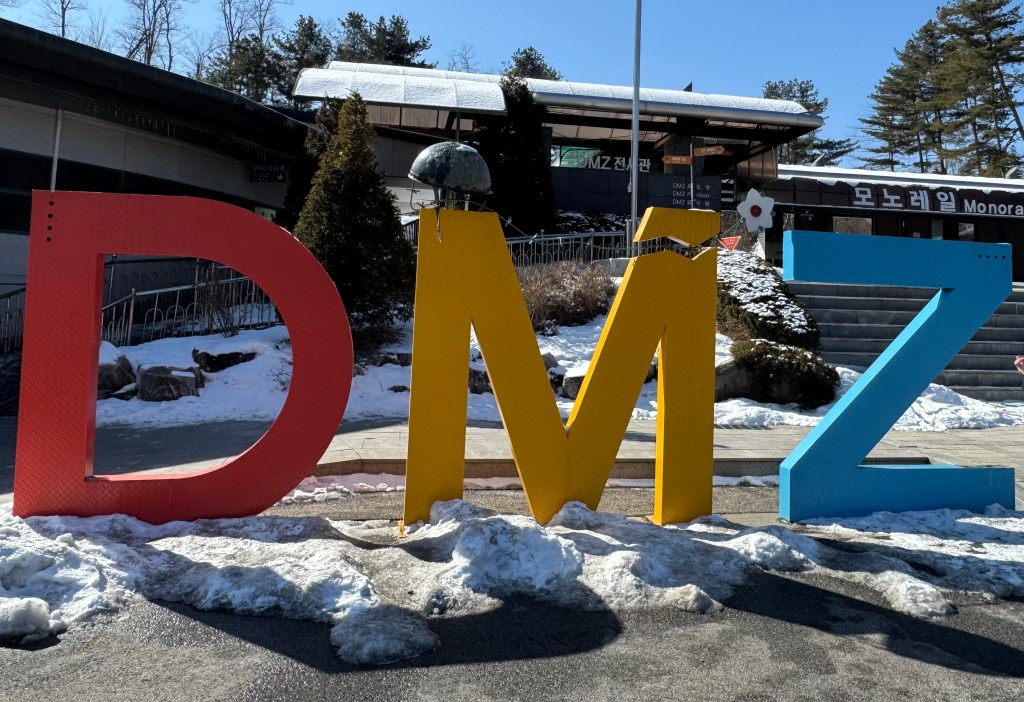
On February 8th, I joined a small group of students and teachers on a tour at the De-Militarized Zone (known as DMZ). This zone is the designated space between the two Koreas. I had always imagined it to be smaller (maybe just a mile wide) but this border area is SO big! Tourist centers that are on the South Korea side take groups to certain points or museums that have exhibits and teach about the Korean war.
There was an intense atmosphere as we passed through guarded checkpoints on the tour bus, showing our passports and IDs to military personnel who were cross-checking our info on a list. At some points, the bus even had to zig-zag through road blocks, some with large spikes in front of them. As an American, it felt surreal to physically be there after frequently hearing about the missile launches and other things in the news from North Korea.

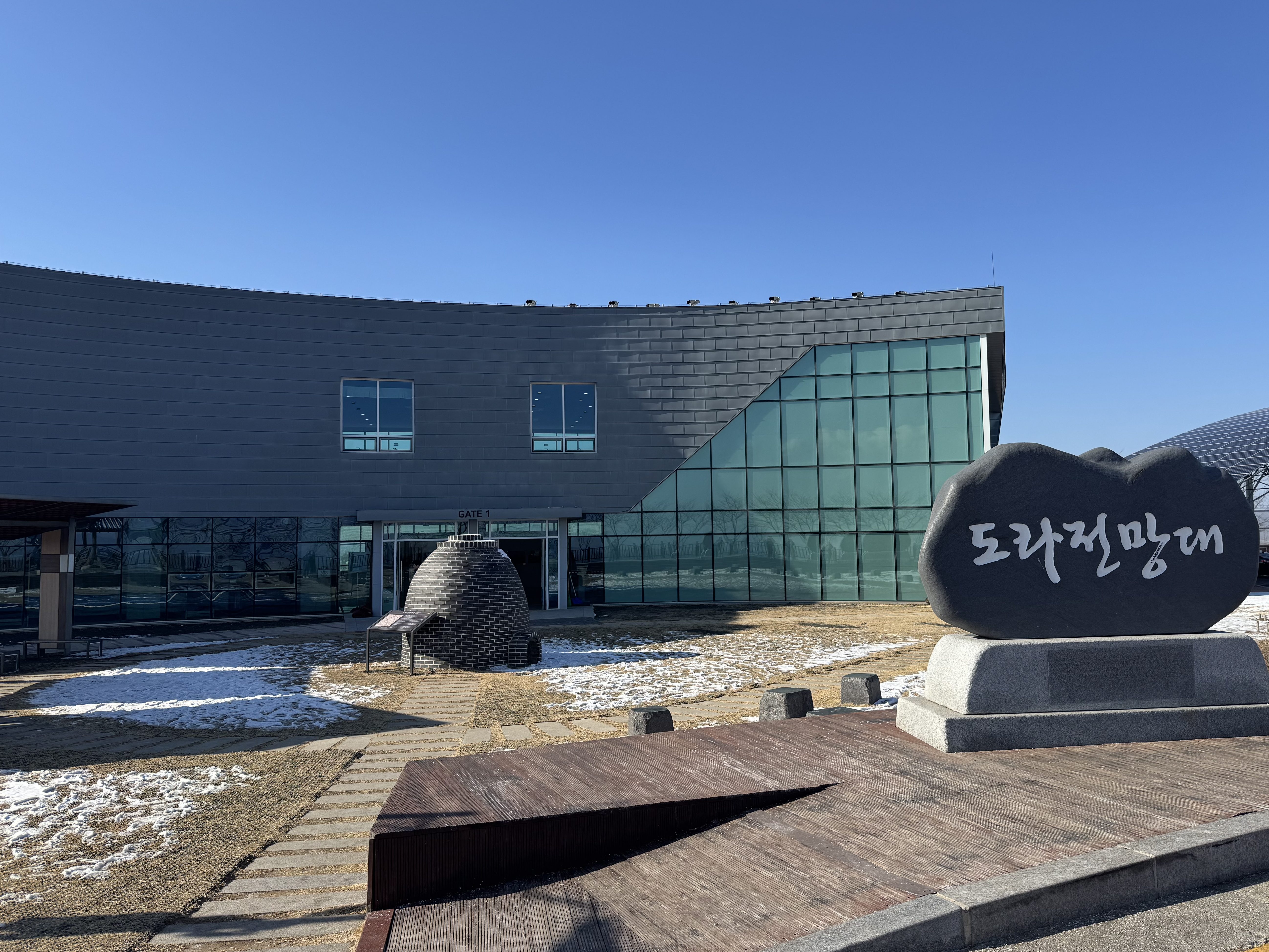
In contrast to the chaotic events and emotions that come with the association of this divide between the two countries, the DMZ was so peaceful. It was a sunny, cool day. As soon as we stepped off the bus, we could hear the echoing propaganda recordings resonating from the speakers on the North Korea side, but there was no violence or fighting. I took in the beautiful views of mountains and valleys while we walked up a hill to Dora Observatory. In the observatory was a steep, lecture style theater room where we sat looking through the wide windows, catching a glimpse of a small city across the border into North Korea. I wondered if the people there were aware of tourists observing their city for hours each day, almost like being watched in a fishbowl.
However, even on peaceful days, the pain still exists in the division.

“Many complicated things” was what one of my native Korean coworkers at the tour said when I asked how it felt to be there in that moment. Seeing this divide of one people into two also made me feel many things.
Although the US is not geographically split into two by military barricades, barbed wire, and soldiers, it still feels like there are two Americas.
Visiting the DMZ made me reflect on the borders of the US, and how these lines create so much hatred between our own people. The southern border of the US is particularly a place of controversy, causing a lot of people to feel “many complicated things.”
I have not personally been to this border, but I know and care about a lot of people who are from the other side of it. Actually, many people from the other side of a lot of borders beyond it.
I would imagine that along most of the length of the US-Mexico border, it would be the same as the DMZ: peaceful and calm. Social media is where the chaos is. Our minds and thoughts are what deepen the rift in the divide.
My experience at the DMZ really made me stop and think- why do these boundaries that are determined by people from past conflicts have to become the burden of the next generation? Why do we allow pain and anger to control how we connect with those around us and the rest of the world? How do you reconcile and heal the pain in division?
I am not intelligent enough to fully realize solutions for these issues, but I do know that a good place to start is through understanding. Listening and seeing people for who they are – not who I think they should be – can open the doors for real connection and real solutions.
We have to remove ourselves from the echo chambers we create for ourselves, to be able to really do that, though. If we can’t have civil discourse about hard topics and allow ourselves to critically reflect on all parts of a debate, especially the parts we don’t agree with, then nothing productive can be done. We will be stuck in the anger, arguments, and hate.
Nothing good comes from division. There is only despair and pain in the divide. But there is hope and love in unity.
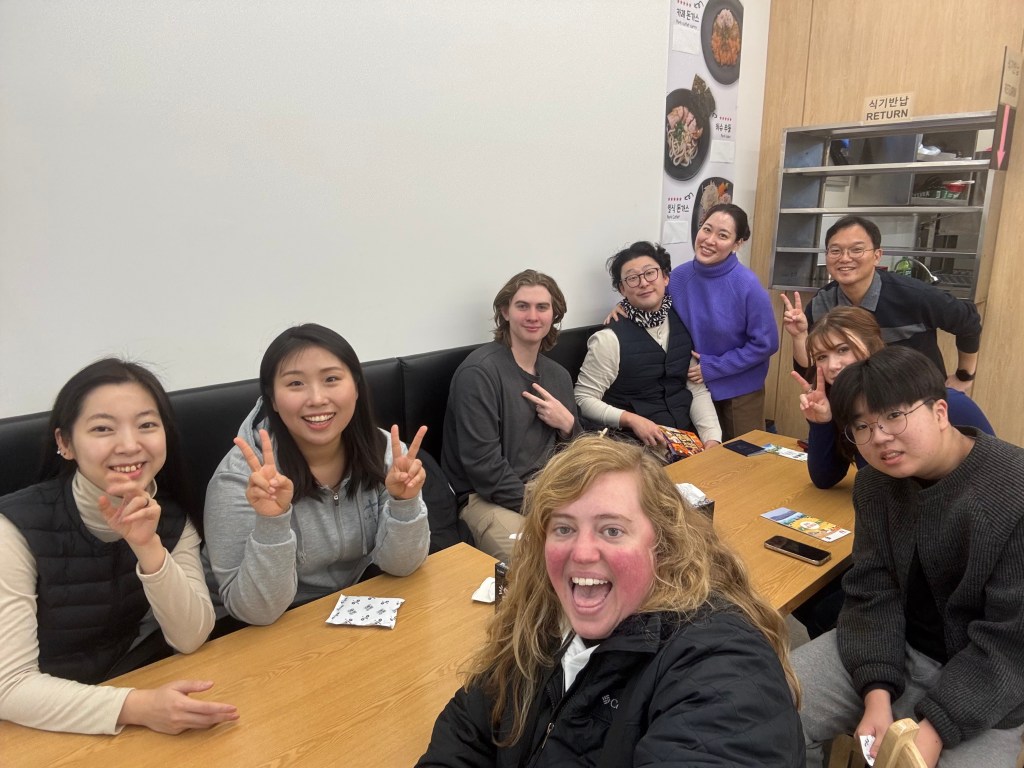
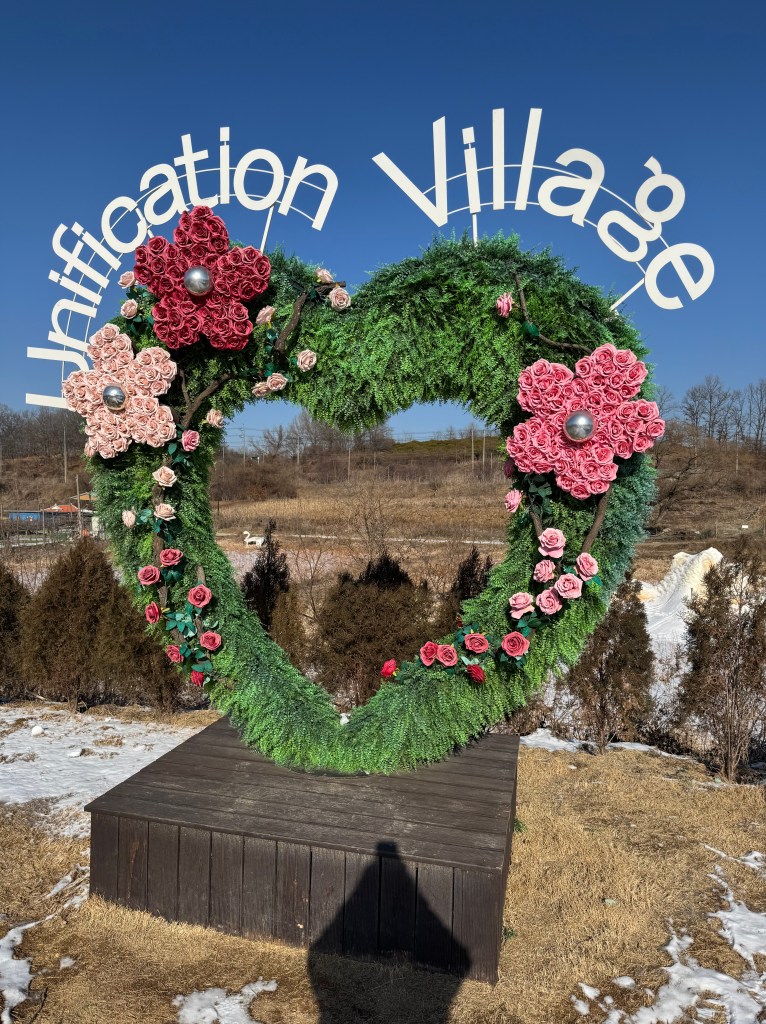
PHOTOS FROM DMZ TOUR:

 Language Expeditions
Leave a comment